
Metrie.
Play the way you always do.Metrie keeps the time, listens and remembers. A practice companion for your music stand that counts the minutes you actually play and shows you what to work on next.In beta on Android.
Practice is where musicians are made.
Most practice disappears. You sit down, you play, and a week later you can't say what you worked on, how long you really played, or whether it helped. Metrie remembers it all for you, quietly, and turns it into the next good step.Counts real playing
It listens through the mic and counts the minutes you play, not the minutes the app is open.
Hands-free
Talk to it from across the room: start, pause, the next part, a slower tempo, a note for later.
Knows what's next
A library built for your instrument, and plans that adapt to how your sessions go.
Private by design
Your audio, your words and your recordings stay on your phone.
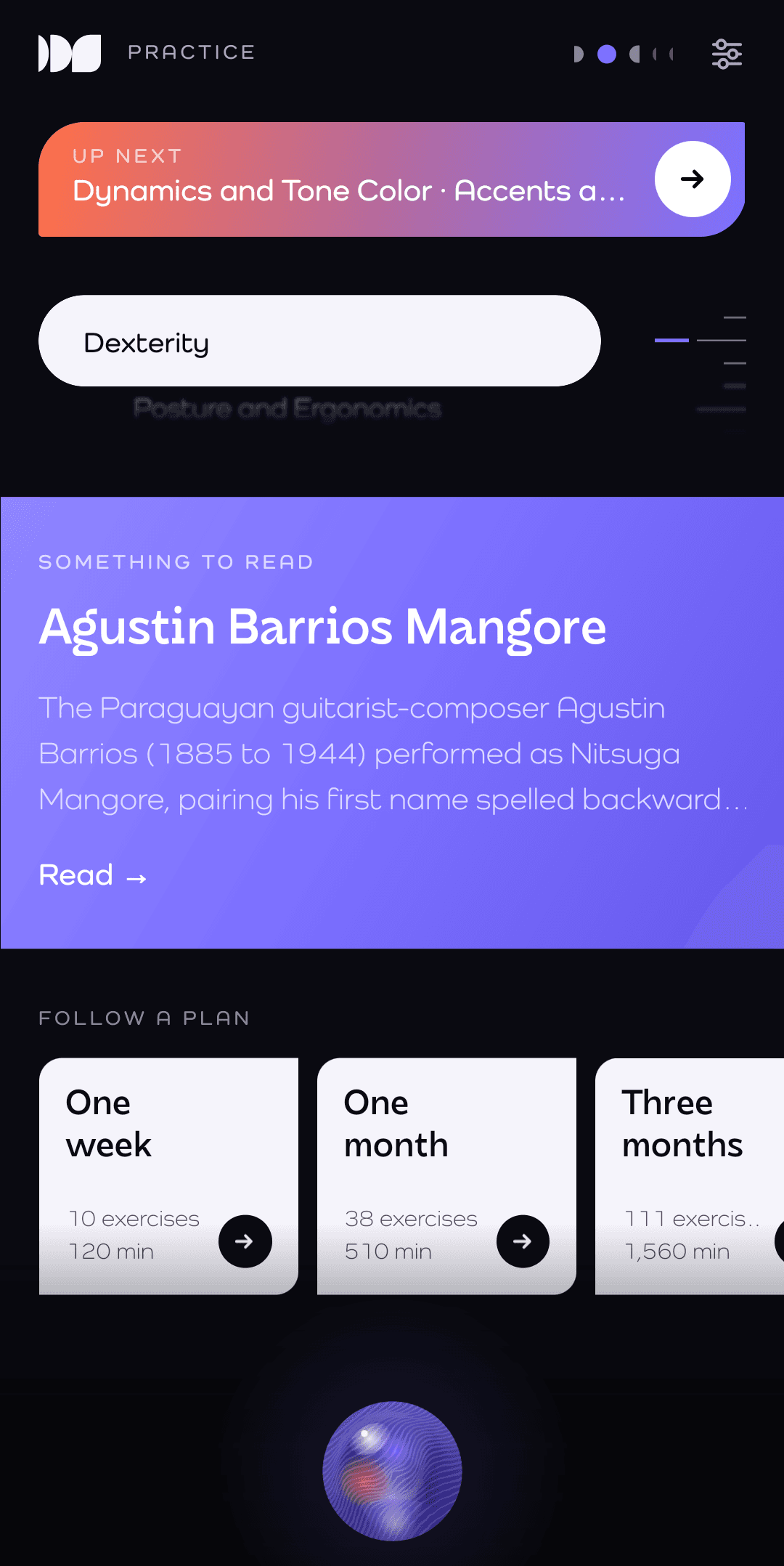
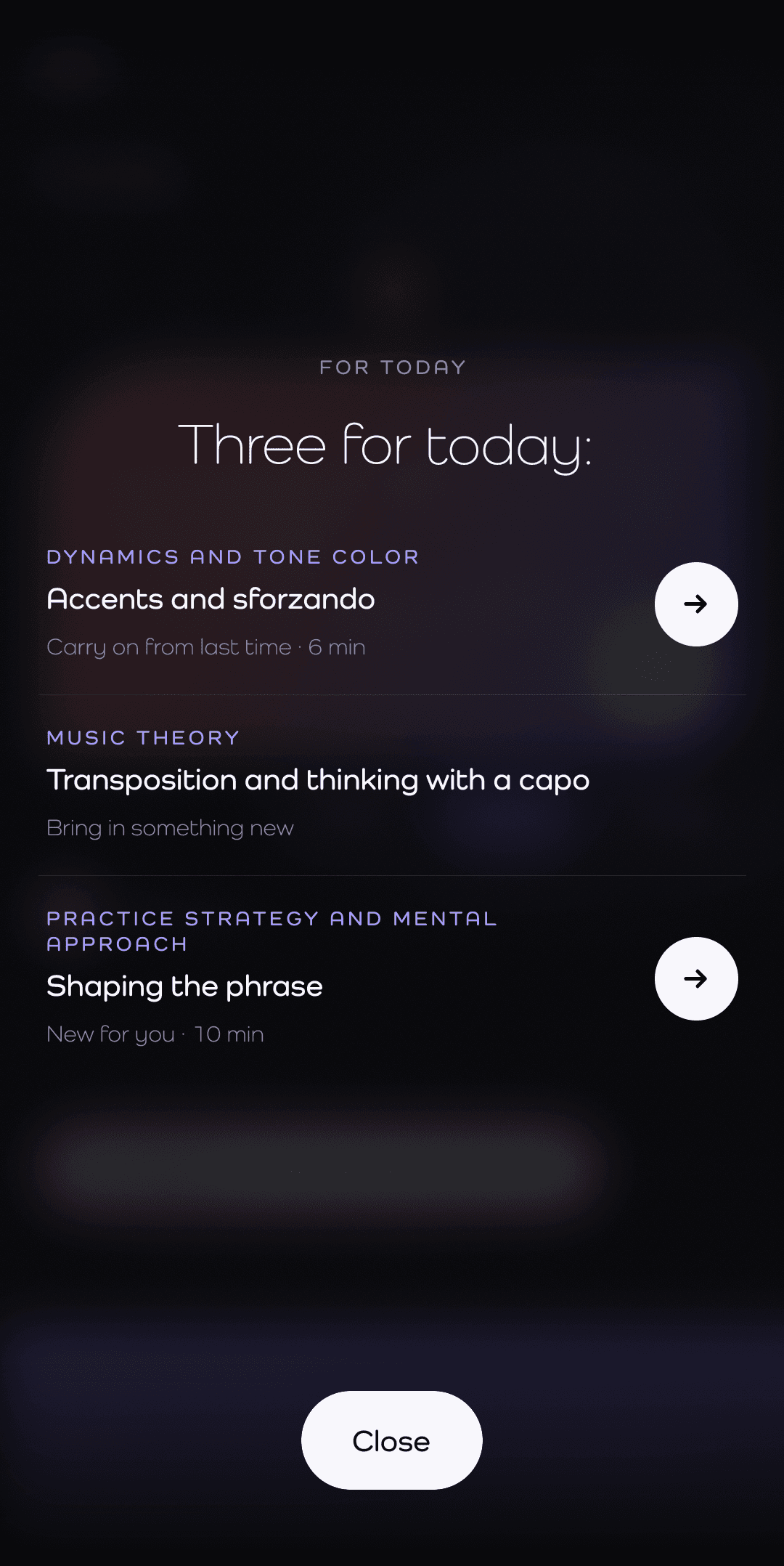
Every day starts with Up next.
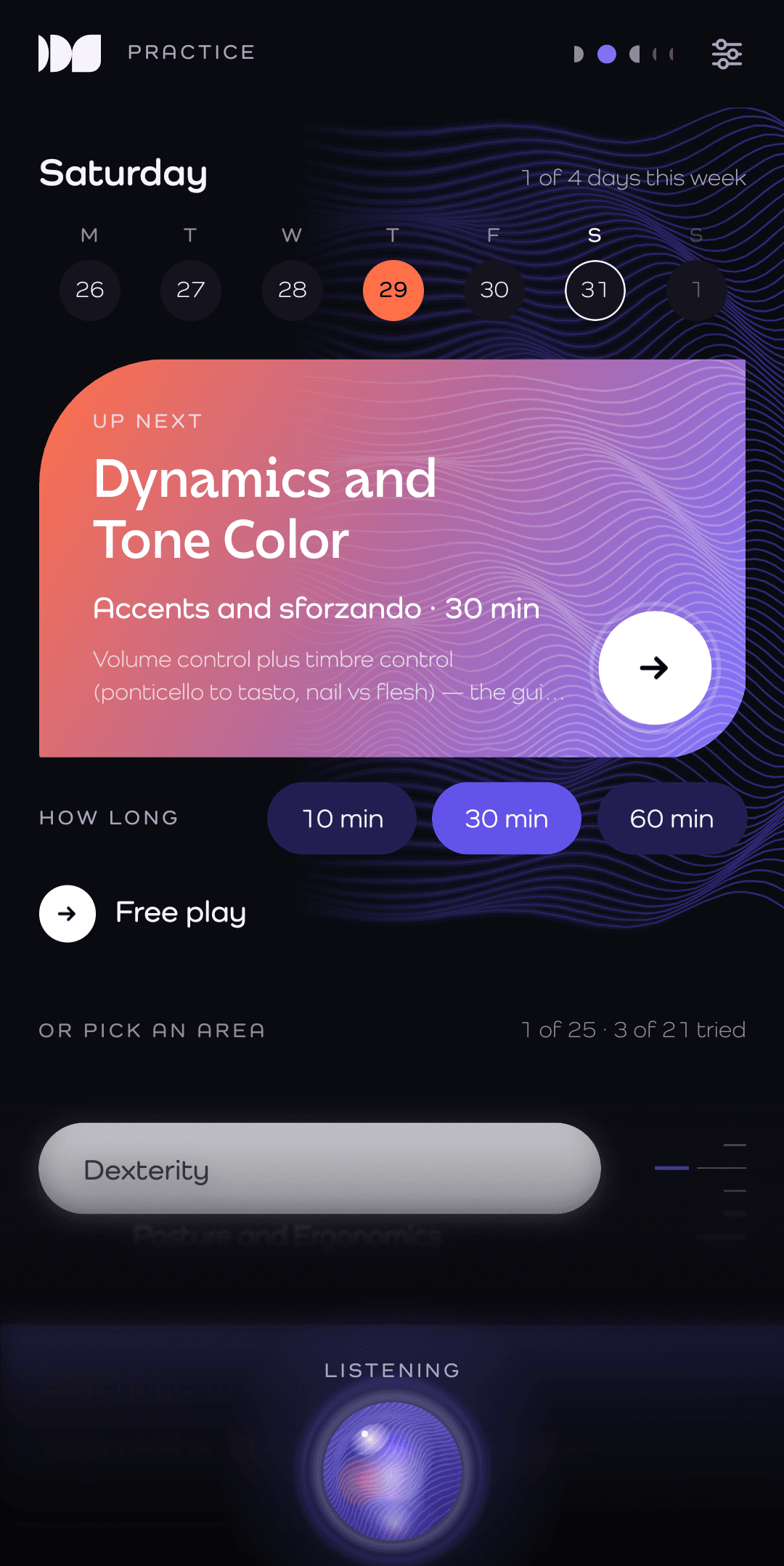
Open Metrie and today's practice is waiting: what to play, for how long, and why. It carries on from last time, with what was weak last time in mind. Pick 10, 30 or 60 minutes, choose an area, or just play freely.
Before a session starts, Metrie shows it part by part, with how long each takes: a warm-up, the core work, something to bring it together. Tap any part to read what it is and how to do it. Then say “start”, take fifteen seconds to pick up your instrument, and go.
Not every day needs a plan. Free play is a clock and a listening ear, as long as you like. Name it afterwards and it joins the rest of your history.
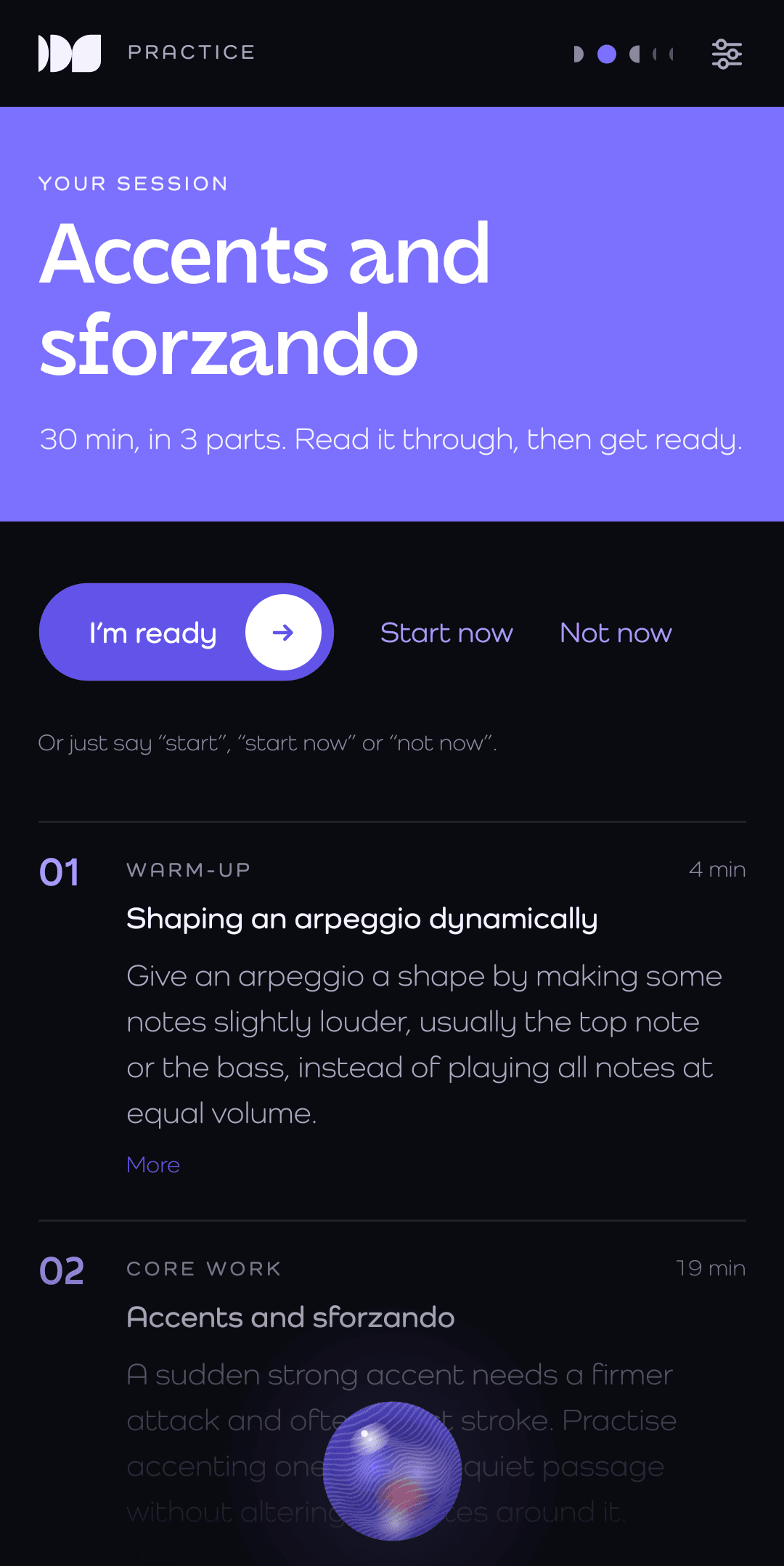
Hands stay on the instrument.
The screen is made to be read from a metre away, on a music stand. Each part counts down on its own, and the colour of the page tells you where you are at a glance. Everything else is said.A voice that understands musicians.
Speech recognition runs entirely on your phone, tuned to the words musicians use: raga names, scale and chord names, tempo markings, technique. No internet, no cloud, nothing sent anywhere. Tap the orb and ask.A library written for your instrument.
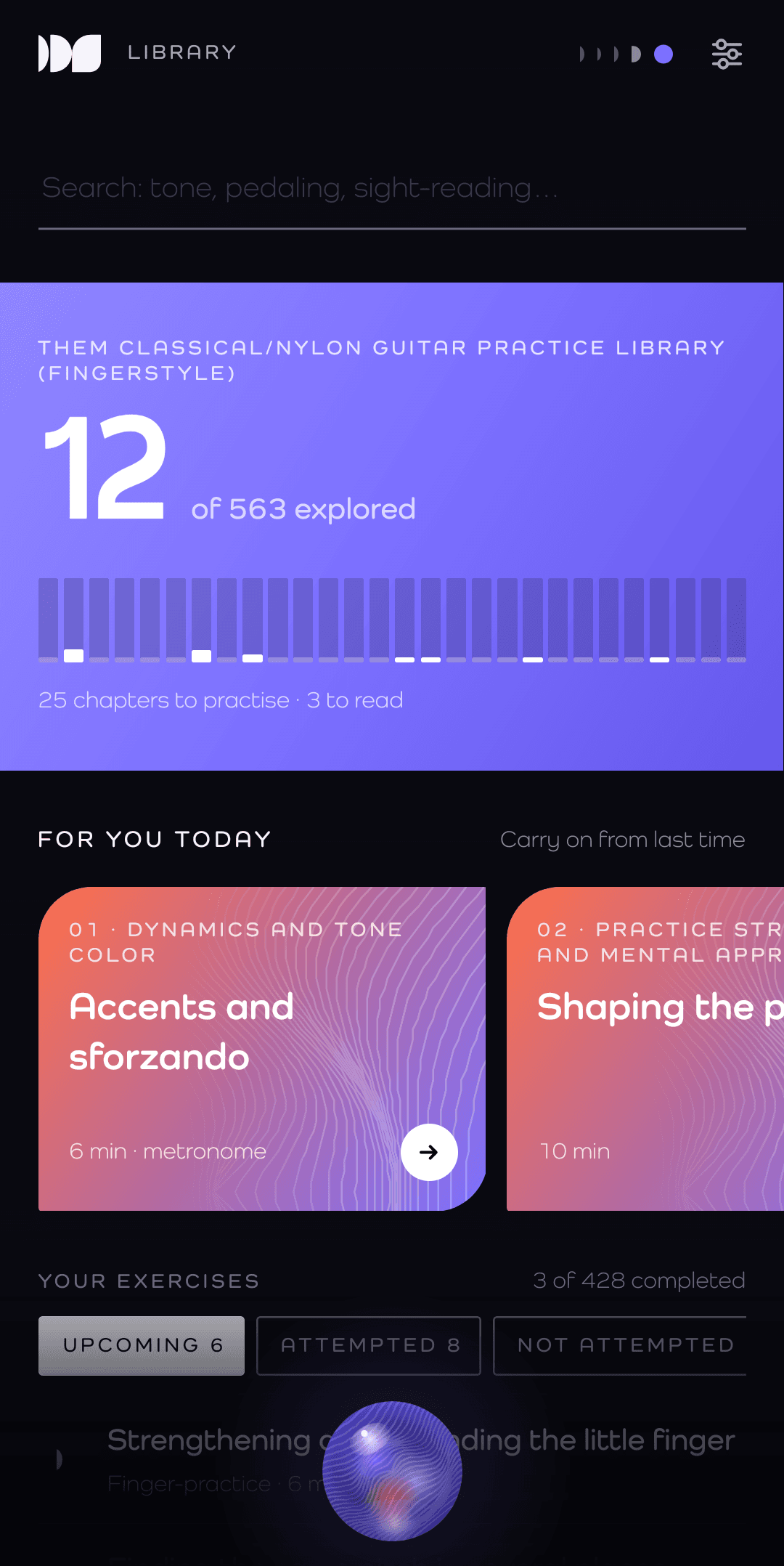
Three complete instrument libraries, organised into chapters from setup and posture to technique, repertoire, theory and history.
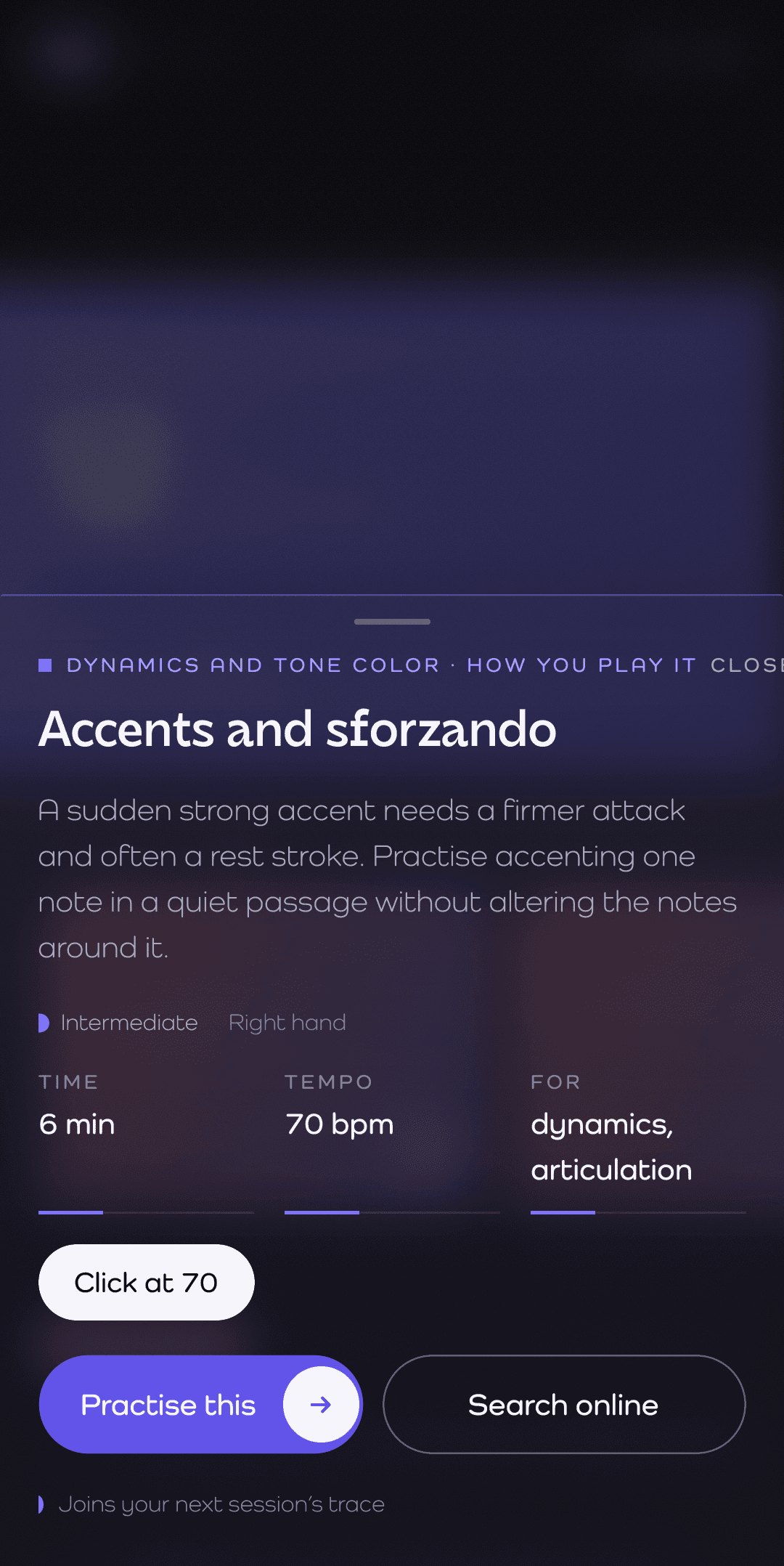
Every practice chapter has two halves: what you play (the scale, the étude, the raga) and how you play it (touch, tone, timing, tension, care). Metrie pairs them, so your session works on both.
Ask for anything in your own words. Search understands related words, so you never need an exercise's exact title.
Plans that grow with you.
Choose a plan of a week, a month, three months, six months or a year. Tell Metrie where you stand, what you already know, and what you want to get better at. It lays out every practice day: what to play, and the focus to play it with.
The plan listens back. After each session you rate how present you were and whether it got better. When something didn't move, the work comes round again. When three sessions go well, it climbs. Miss a day and nothing is lost: the work moves to the next one.
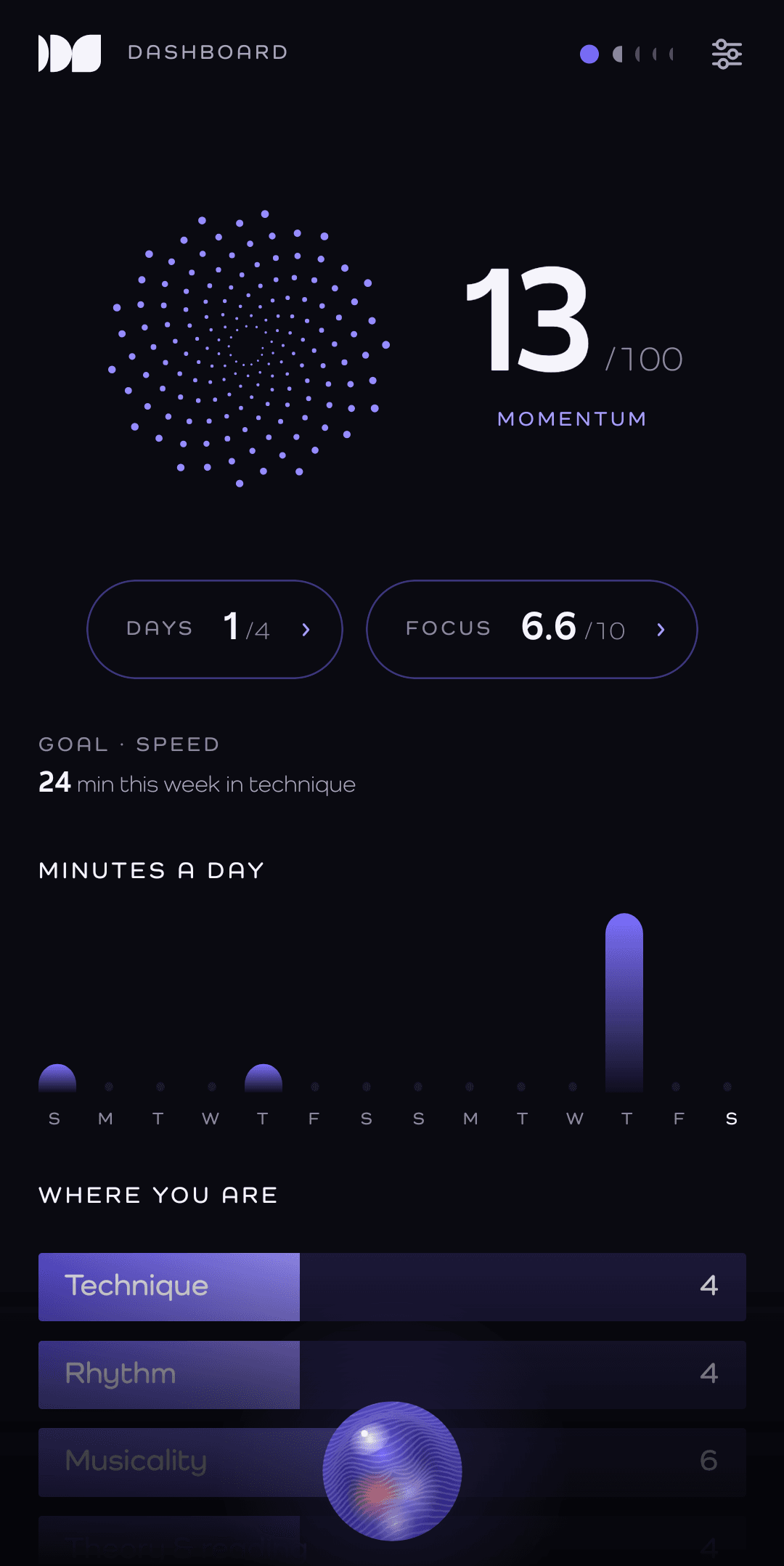
Momentum you can see.
Your practice becomes a living spiral. Every day you play adds to your momentum, and the more you have, the denser the spiral and the faster it turns. Below it: the days you've played this week against your goal, how present you've been, minutes by day, and where you stand in each area of your instrument.
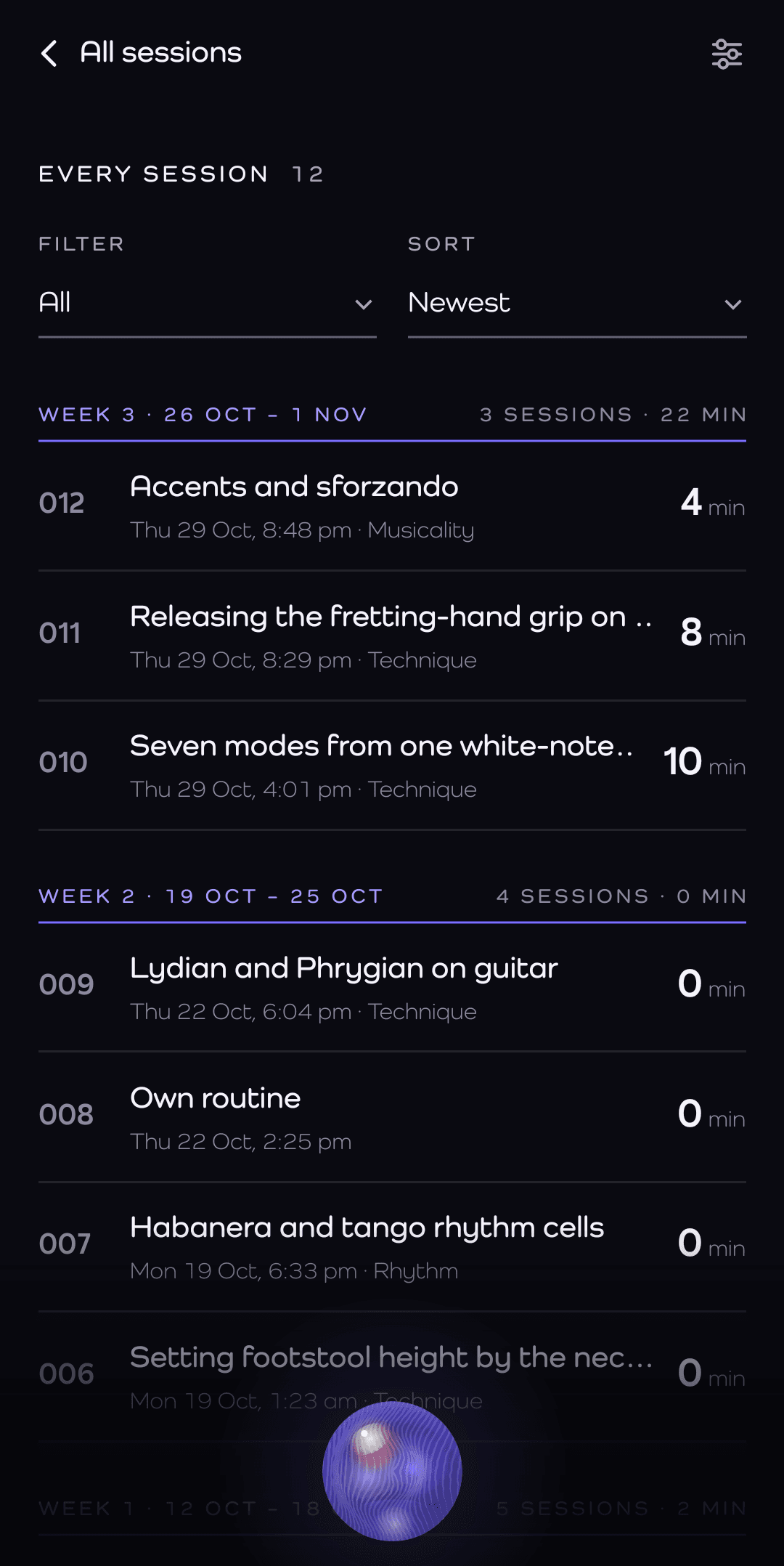
Every session is kept: what you played and for how long, the tempo you reached, your notes, and what you said. Open any one to see it in full, or repeat it with a tap.
The tools you reach for, built in.

Tuner
A precise, steady tuner with modes for guitar, bass, keys, strings, tabla and voice, in Western or Indian notation.
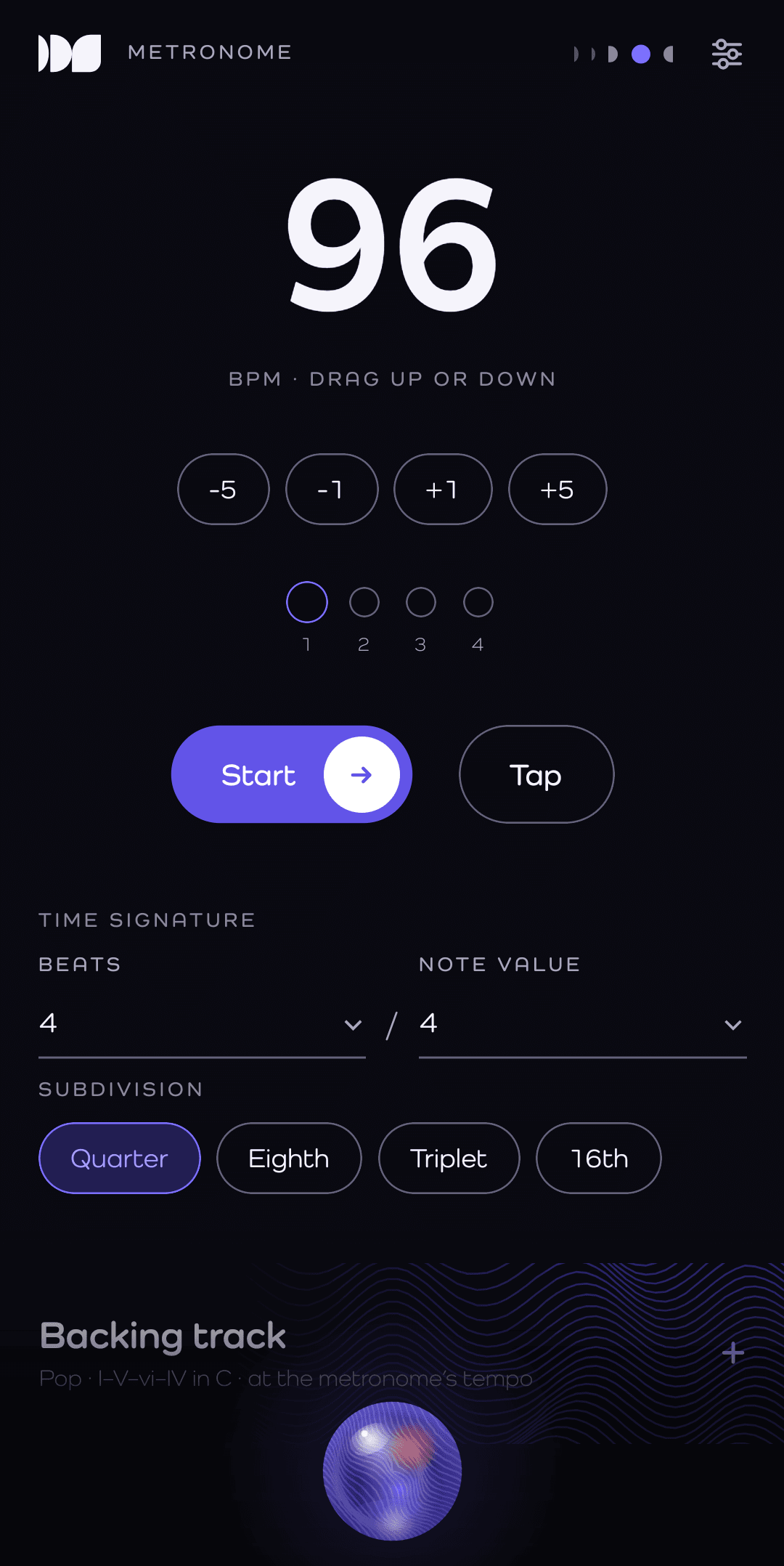
Metronome
A steady click you can set by voice, with backing tracks to play against: pop, jazz ii–V–I, 12-bar blues, minor, gospel and a modal vamp.
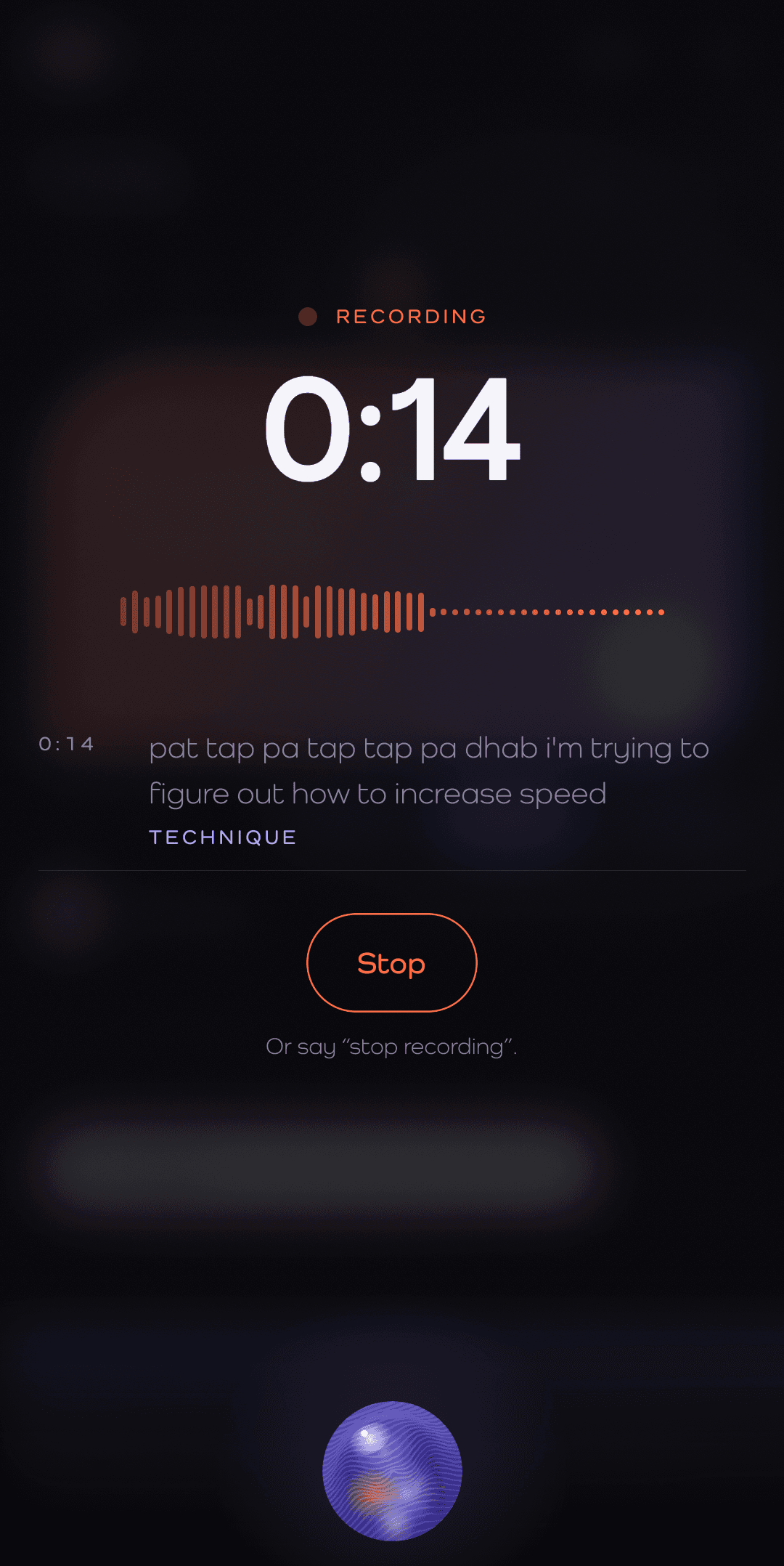
Recorder
Record yourself and listen back. Whatever you say while recording is written down beside the take, so you can find it later. Say “stop recording” and keep playing. Share any take in a tap.
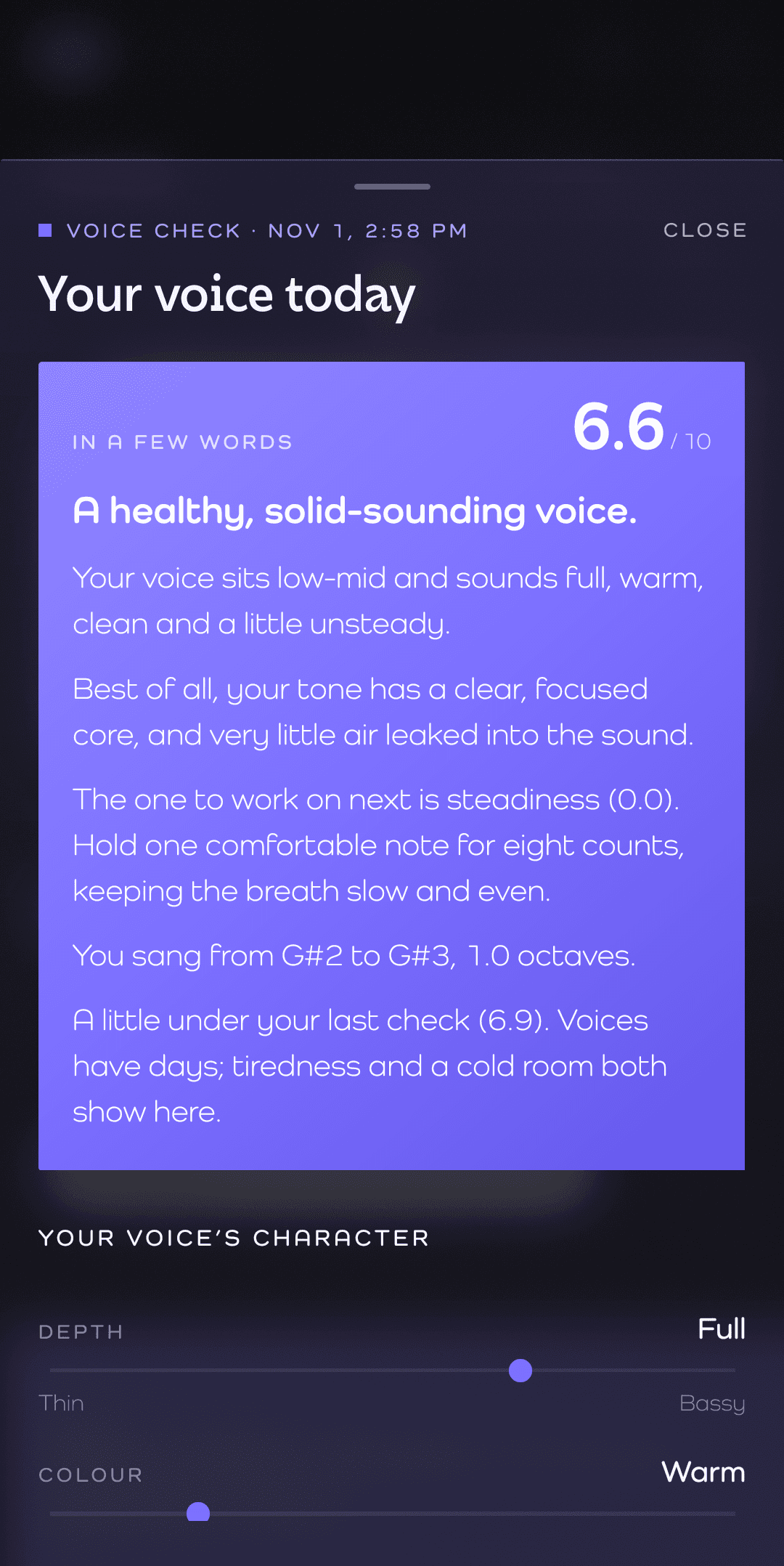
Voice check, for singers
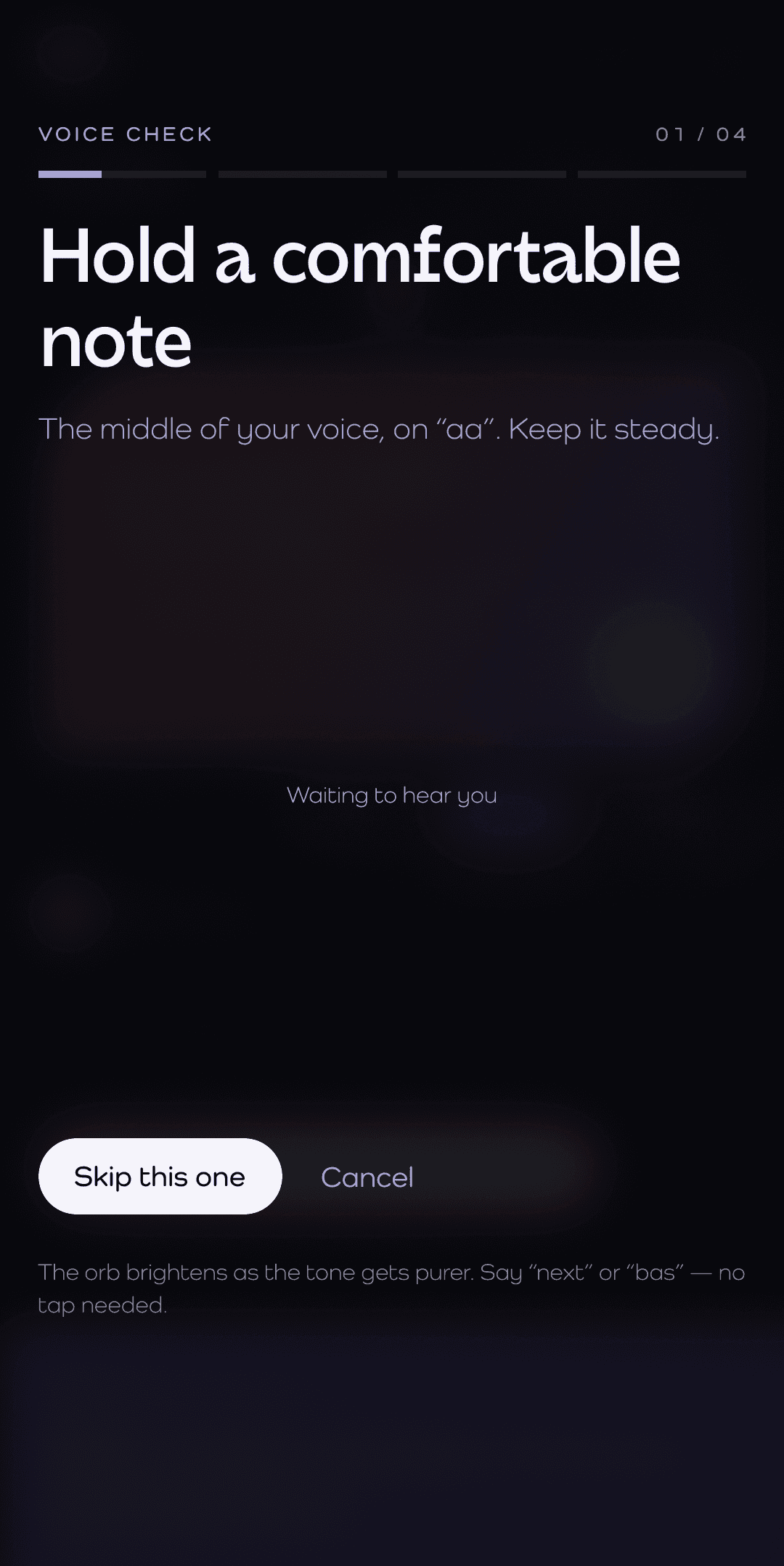
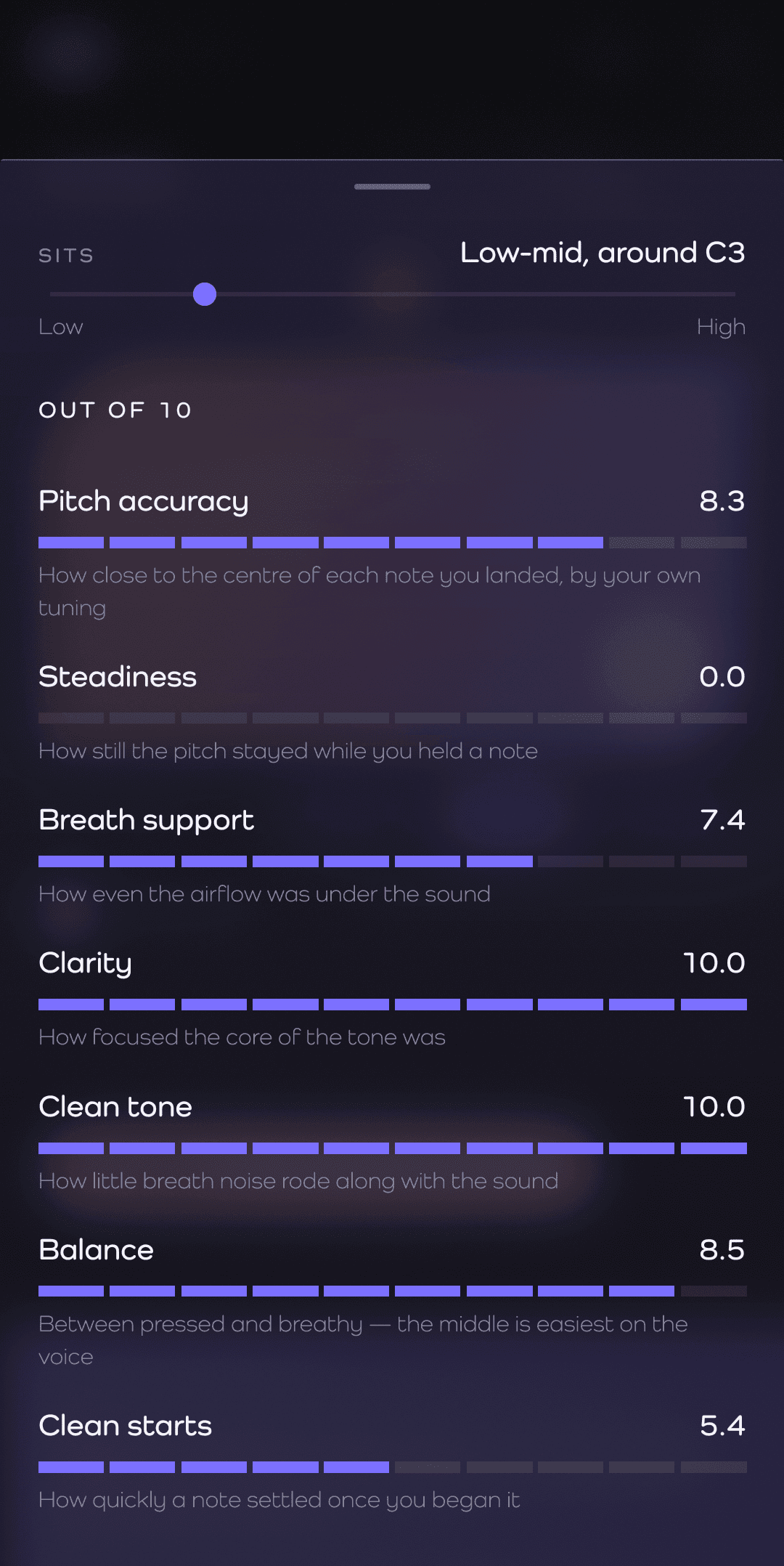
Hold a note and Metrie measures pitch accuracy, steadiness, breath support, clarity, clean tone and range, then tells you in a few plain words how your voice is today.
Hear how your voice is moving.
Hold one comfortable note on “aa”. Metrie listens and scores what it heard out of ten: pitch accuracy, steadiness, breath support, clarity, clean tone and balance, with what each one means.
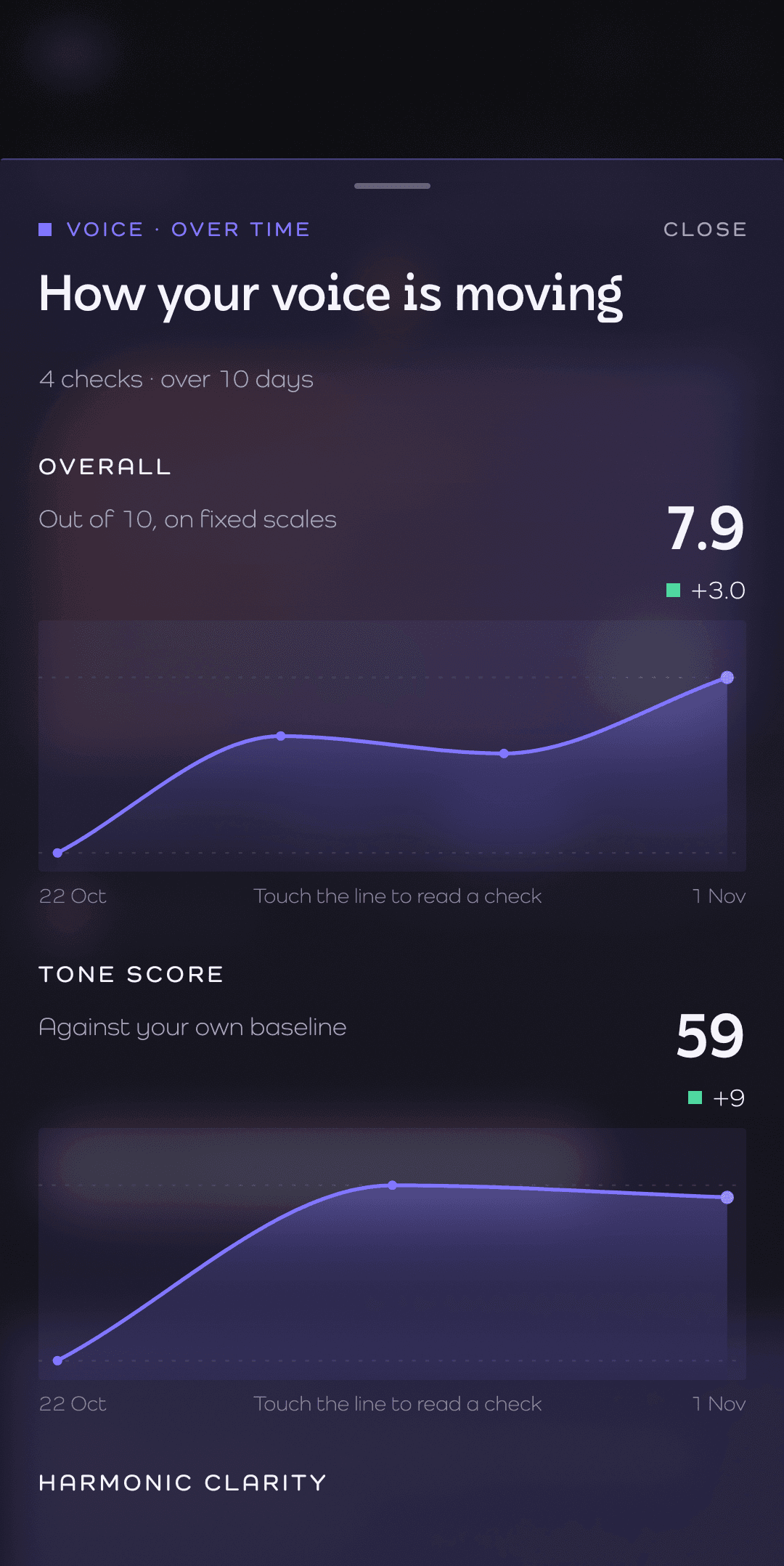
Every check is kept, so you can see how your voice moves over the weeks, against your own baseline.